Tungstic Acid


Tungstic acid (H?WO?) is a crucial intermediate and basic compound within the tungsten chemistry system, holding a highly significant position in both tungsten chemistry and its applications.
I. Basic Concept
Tungstic acid (chemical formula H?WO?) is an inorganic acid containing tungsten, generally considered the parent compound of multiple tungsten derivatives, including tungstates, paratungstates, and polytungstates. It is not easily stable in isolation and usually exists in hydrated or colloidal form. In industrial and research contexts, the commonly encountered “tungstic acid” is typically hydrated tungstic acid (H?WO?·xH?O).
II. Preparation Methods
1. Acidification and Precipitation of Tungstates
o For example, using sodium tungstate (Na?WO?) as a raw material, tungstic acid can be obtained via an acid reaction:
Na2WO4+2HCl→H2WO4↓+2NaCl
2. Roasting Method
o In some industrial processes, ammonium paratungstate (APT) is calcined to produce WO?, which is then treated with acid to obtain tungstic acid.
III. Physical and Chemical Properties
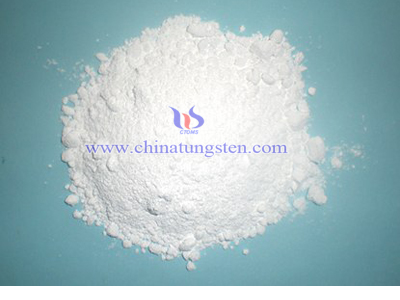
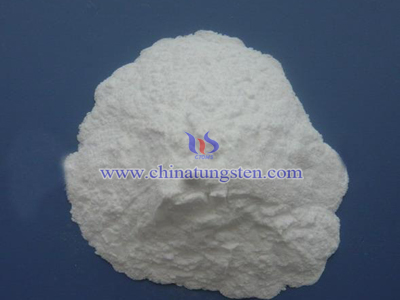
? Appearance: Yellow or yellow-green powder, often in colloidal form.
? Solubility: Sparingly soluble in water, but soluble in ammonia and alkaline solutions to form the corresponding tungstates.
? Stability: Decomposes upon heating to yield tungsten trioxide (WO?).
? Acidity: A weak dibasic acid, but in practice behaves more like an acidic oxide, reacting with bases to form tungstates.
IV. Main Applications
1. Precursor for Tungsten Compounds
o Tungstic acid serves as a fundamental raw material for producing tungstates, paratungstates, polytungstates, tungsten oxides, and other related compounds.
2. Analytical Reagent in Chemistry
o Used for detecting elements such as phosphorus and silicon (e.g., through the formation of phosphotungstic acid and silicotungstic acid).
3. Industrial Applications
o Applied in the production of fluorescent materials, pigments, catalysts, and more.
4. Functional Materials
o Used as a precursor in the preparation of optoelectronic materials, such as electrochromic WO? thin films.
V. Typical Derivatives
? Tungstates: Na?WO?, CaWO?, etc.
? Paratungstates: APT ((NH?)??[H?W??O??]).
? Polytungstates: Such as sodium polytungstate (Na?[H?W??O??]·xH?O).
? Heteropoly Acids: Phosphotungstic acid (H?PW??O??), silicotungstic acid (H?SiW??O??).
Related Products: